What way it is ‘supposed’ to be?

The more things go “our way” for a while, the more we can believe that that is the way it is supposed to be. And when things don’t go “our way,” which sooner or later they will not, we can get angry, disappointed, depressed, devastated forgetting that it was never “supposed to be” any one way at all.

Jon Kabat-Zinn, Arriving at your own Door

What we can change


We cannot always change the perplexing conditions of our lives

– but we can change how our minds relate to them.

Tara Bennett-Goleman

Time past and time future

Go, go, go, said the bird: Human kind

Cannot bear very much reality.

Time past and time future

What might have been and what has been

Point to one end, which is always present.

T.S. Eliot, Burnt Norton


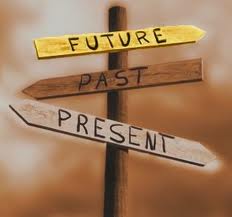
Another post on remaining in the present moment, this time as a practical way of working with fear. It is prompted by a nice comment I got from Eric regarding a previous post, where he quoted Einstein. That  set me thinking of another quote from the same famous scientist, which echoes some of the ideas we find in our meditation practice: People like us, who believe in physics, know that the distinction between past, present, and future is only a stubbornly persistent illusion.

When we meditate we come to see that – in one sense –  the past and the future exist only in the mind. And often with regard to the future we  create scenarios which will never happen,  leading to worry. Last night in the MBSR Course, we had a discussion about  how we can work when strong emotions, such as fear, arise. One thing we can do is to recognize that some of the thoughts connected to the fear concern future scenarios which may never happen. If we can let go of those thoughts – and that is not always easy – what have we got to work with when we just stay in the present?  The main thing is the sensation in our body at this moment. We notice there is a tightness in the chest, a clenching or a knot in the stomach, or rushed breathing. So this is our practice: We recognize this,  and stay with the present, experiencing fear or anxiety as it is actually happening, as an embodied feeling. We then try not to add any judgment about the feeling or about ourselves to the moment. We let go of trying to fix it. We practice just being with the sensation for as long as we can, seeing what is going on. Thich Nhat Hahn writes about this practice as a way of taking care of  ourselves, almost like we would take care of a frightened child:

Mindfulness is there in order to recognize. To be mindful of something is to recognize that something is there in the present moment. Mindfulness is the capacity of being aware of what is going on in the present moment. “Breathing in, I know that fear has manifested in me; breathing out, I smile towards my fear.” This is not an act of suppression or of fighting. It is an act of recognizing. Once we recognize our fear, we embrace it with a lot of awareness, a lot of tenderness.
Make the most of life:Stay in the present

A similar idea to yesterday’s one posted about Saint David. We make our future happiness by taking care of the present moment.

The past is gone, and I don’t know what’s coming in the future. It’s obvious that if I want my life to be whole, to resonate with feeling and integrity and value and health, there’s only one way I can influence the future: by owning the present. If I can relate to this moment with integrity, and then this moment with integrity, and then this moment with integrity, wakefully, then the sum of that is going to be very different over time, over many moments that stretch out into what we call a life, than a life that is lived mostly on automatic pilot, where we are reacting and being mechanical and are therefore somewhat numb.

Jon Kabat Zinn

What is your prison?

The only real prison is fear,

and the only real freedom is freedom from fear.

Aung San Suu Kyi

Positive living: Don’t wait for the other person

Sometimes we pass through periods in our life when it seems safer to close in on ourselves. We may get blocked in some relationships, or harden around what we perceive to be a hurt caused by others, or simply drift apart. And so we pull down the shutters and withdraw.  The mind loves categories, and when we get threatened these get more polarized, making it harder to see the world from any other viewpoint than our own. A lot of our energies go into convincing ourselves that we are right, ensuring that  any cognitive dissonance between our values and our actions is eliminated.  Self-justification then kicks in, that useful  strategy  which blinds us to the possibility that we were wrong, allowing us sleep at night by reducing regret and reinforcing our actions.

However, closing ourselves off from others may not always be right, even if  our safety mechanism tells us it is. It can keep up trapped in the past, which we cannot change , rather than seeing new possibilities in the present. So, when you notice that you are running a story about what others have done to you, see if you can remind yourself that you are the one who has the power to determine how you feel about what’s going on. Everything is workable, and thus you can work with the words and actions of other people in contact with you. Your response is entirely up to you. To live a fuller life, we often we need a generosity that operates on a different kind of logic, one which does not count or measure but rather dares to take the first step.

Initiate giving. Don’t wait for someone to ask. See what happens — especially to you. You may find that you gain a greater clarity about yourself and about your relationships, as well as more energy rather than less. You may find that, rather than exhausting yourself or your resources, you will replenish them. Such is the power of mindful, selfless generosity. At the deepest level, there is no giver, no gift, and no recipient . . . only the universe rearranging itself.

Jon Kabat Zinn,  Wherever You Go There You Are: Mindfulness Meditation in Everyday Life