Sunday Quote: ….and the wind

In the East the moon is a symbol of Enlightenment, in the West of the Unconscious. Times of difficulty can be times of growth

Although the wind
blows terribly here,
the moonlight also leaks
between the roof planks
of this ruined house.

Izumi Shikibu, Japanese poet, 974-1034, one of the thirty-six female immortals of poetry.

No future, no past

Looking East today, to mark the Chinese New Year, with a similar idea to yesterday’s post

Among the sixteen types of meditation, the baby’s practice is the best.

YuanWu Keqin, Chinese Chan monk, 1063–1135

A new day, a new week

We have a tendency to live out of the past and to limit different experiences and the people we encounter today to what we expect of them. In this way we lose any sense of wonder or newness

The day you teach the child the name of the bird,

the child will never see that bird again.

Krisnamurti

Abba Poemen said about Abba Pior that every single day he made a fresh beginning.

Sayings of the Desert Fathers

Do nothing

The first day of Spring in the Celtic Calendar, even though you would not think so with the cold snap which has hit us after a mild January.

A text I have posted before but I really like its simplicity.

It is often wiser just to let things happen rather than forcing the universe into how we think it should be

Sitting quietly, doing nothing,

Spring comes, and the grass grows, by itself

Basho

Stuck in concepts

There is great practical wisdom in understanding how the mind
creates boundaries of concern and interest, and how we can work
with these. Of course there are boundaries; there are other beings
on earth. But what counts is how those boundaries are maintained,
opened and closed.

When we consider otherness — the way beings
are different from us — we can feel either insecurity, ‘How does
she compare with me?’ or contempt, ‘You’re not as good as me’; or
fear and intimidation, ‘You’re better or stronger than me.’ Or, we
can feel adoration/attraction — ‘I want to be bonded to you.’

These immediate assumptions are called ‘conceit’: that is, we conceive
of people as worse, better or the same as us. The effect is that the
mind’s responsiveness gets stuck. 

Caught in the conceit of self-view, the heart doesn’t extend its boundaries of appreciation and concern. 

We take each other for granted as ‘my wife,’ ‘my boss,’ ‘my teacher’; and that fixing of them freezes our sensitivity. In that state, the heart easily tips over
into complaining about the other not being the way they ‘should
be’ (or rather the way I want them to be), and so the heart becomes
a breeding ground for ill-will.

Ajahn Sucitto, Parami: Ways to Cross Life’s Floods

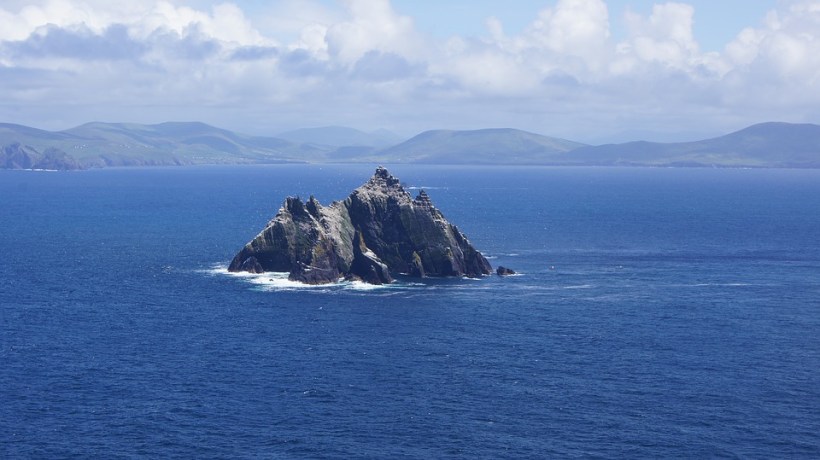
On the island


how would it be to allow for knowing
and not knowing:

allowing room
for the mystery
of creating
to be able to wonder
softly
without needing to understand everything
to trust in the process
to trust in love
to trust in the mystery and wonder
of the universe
that beats softly wildly
true
all round about us,
that is hidden
in the mists
in the clouds and the rain
in the wind blowing and the rain lashing down on your window,
reminding you
poetically
prosaically
that this is where you are,
on the island,
at the edge,
in a place of finding
and refinding,
and remembering
to remember
the feel of the mist, wind and rain.

Author Unknown, sometimes attributed to John O’Donohue