![]()
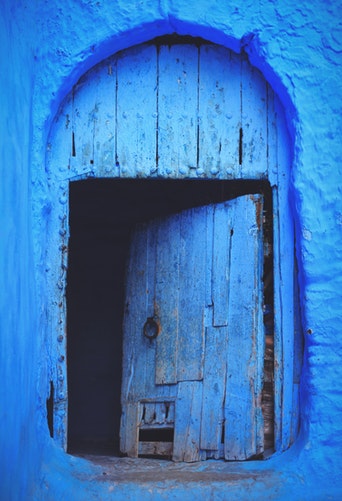
Discernment is a process of letting go what we are not
Father Thomas Keating, Cistercian monk, author of Open Mind, Open Heart
photo mschlindwein
![]()
Discernment is a process of letting go what we are not
Father Thomas Keating, Cistercian monk, author of Open Mind, Open Heart
photo mschlindwein
![]()
It’s so tempting to want the answers before we begin the journey. We like to know our way. We like to have maps. We like to have guides. But we are more like a breathing puzzle, a living bag of pieces, and each day shows us what a piece or two is for, where it might go, how it might fit. Over time, a picture starts to emerge by which we begin to understand our place in the world. Unfortunately we waste a lot of time seeking someone to tell us what life will be like once we live it. We drain ourselves of vital inner fortitude by asking others to map our way. The instructions are in the living.
Mark Nepo, The Book of Awakening
Map of Ireland 1592 by Abraham Ortelius
![]()
If you don’t look at things through your concepts, you’ll never be bored.
Every single thing is unique.
Every sparrow is unlike every other sparrow despite the similarities.
It’s a great help to have similarities, so we can abstract, so that we can have a concept.
It’s a great help, from the point of view of communication, education, science.
But it’s also very misleading and a great hindrance to seeing this concrete individual.
If all you experience is your concept, you’re not experiencing reality, because reality is concrete.
The concept is a help, to lead you to reality, but when you get there,
you’ve got to intuit or experience it directly.
.
Anthony de Mello. sj.
photo david friel
![]()
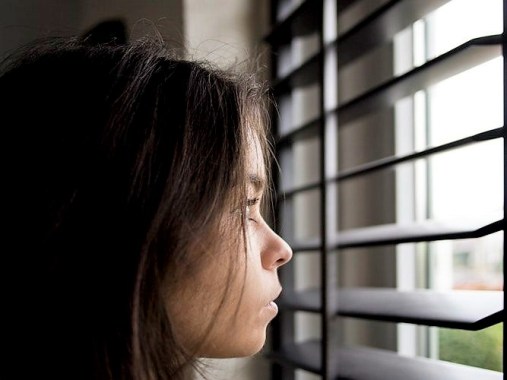
That we go numb along the way is to be expected. Even the bravest among us, who give their lives to care for others, go numb with fatigue, when the heart can take in no more, when we need time to digest all we meet. Overloaded and overwhelmed, we start to pull back from the world, so we can internalize what the world keeps giving us. Perhaps the noblest private act is the unheralded effort to return: to open our hearts once they’ve closed, to open our souls once they’ve shied away, to soften our minds once they’ve been hardened by the storms of our day.
Mark Nepo, Hearing the Cries of the World
photo Daniel Francisco madrigal Moller

I came across a baby Jackdaw last evening in the grounds of the monastery at Moone. It was still somewhat unsteady in flight and was taking a rest on the ground, seeming a little bit intimidated by the next step it has to take in life, having to let go and learn to fly.
How surely gravity’s law,
strong as an ocean current,
takes hold of even the strongest thing
and pulls it toward the heart of the world.
Each thing-
each stone, blossom, child –
is held in place.
Only we, in our arrogance,
push out beyond what we belong to
for some empty freedom.
If we surrendered
to earth’s intelligence
we could rise up rooted, like trees.
Instead we entangle ourselves
in knots of our own making
and struggle, lonely and confused.
So, like children, we begin again
to learn from the things,
because they are in God’s heart;
they have never left him.
This is what the things teach us: to fall,
patiently trusting our heaviness.
Even a bird has to do that
before he can fly.
Rainer Maria Rilke