Letting the breath be

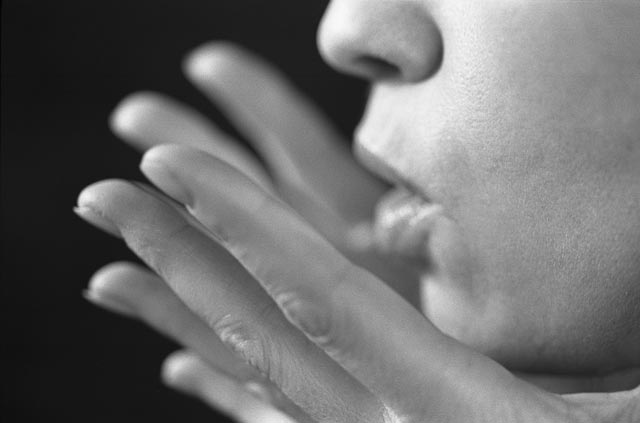
We are all breathing. The first instruction is just to know that we are, not in an intellectual sense, but to be aware of the simple sensation of, the in-breath and the out-breath. Even in this instruction we are learning something extremely important, to allow the breathing follow its own nature, to breath itself. We are not trying to make the breath simple or keep it shallow. We are seeing how it is.That flies in the face of our lifelong conditioning to control, direct and orchestrate everything. We’re terrified of chaos, afraid that if we don’t keep things in their place they will all fall apart. Most of us are quite good at controlling, and what we’d really like is to be even better at it. Our tendency is to ride the breath, push it along, help it out…..

That isn’t the instruction. The instruction is to let it be, to surrender to the breathing. We are learning even in this first instruction the art of surrender.

Larry Rosenberg, Breath by Breath
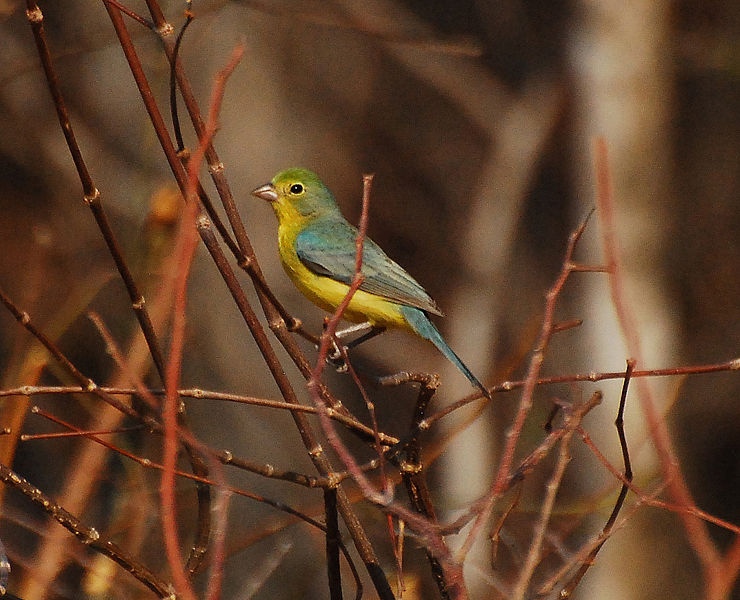
Giving the mind a break

The first of the basic practices to which I was introduced as a child – which most teachers introduce to beginning students … is known as “shamatha”. “Shama” may be understood in a variety of ways, including “peace”, “rest” or “cooling down” from a state of mental, emotional or sensory excitement. Maybe a modern equivalent would be “chilling out”. In other words, “shamatha” means abiding in a state that is rested or “chilled out”, which allows the little bird to just sit on one branch for a while.

Most of us, when we look at something, hear something, or watch a thought or emotion, have some sort of judgment about the experience. This judgment can be understood in terms of three basic “branches”: the “I like it” branch, the “I don’t like it” branch or the “I don’t know” branch. Each of these branches spread out into smaller branches: “good” branch;  “bad” branch; “pleasant” branch; “unpleasant” branch; “I like it because…” branch; “I don’t like it because…” branch; “could be nice or not” branch; “could be good and bad, pleasant and unpleasant” branch; and the “neither good nor bad, pleasant nor unpleasant” branch. The possibilities presented by all these branches tempt the little bird to flutter between them, investigating each one.

The practice of shamatha involves letting go of our judgments and opinions and just looking at, or paying attention to, what we see from whatever branch we’re sitting on…. Rest there on one branch. Attending to our experience in this way allows us to distinguish our judgments and opinions from the simple experience of seeing.

Yongey Mingyour Rinpoche, Joyful Wisdom

On change and constancy

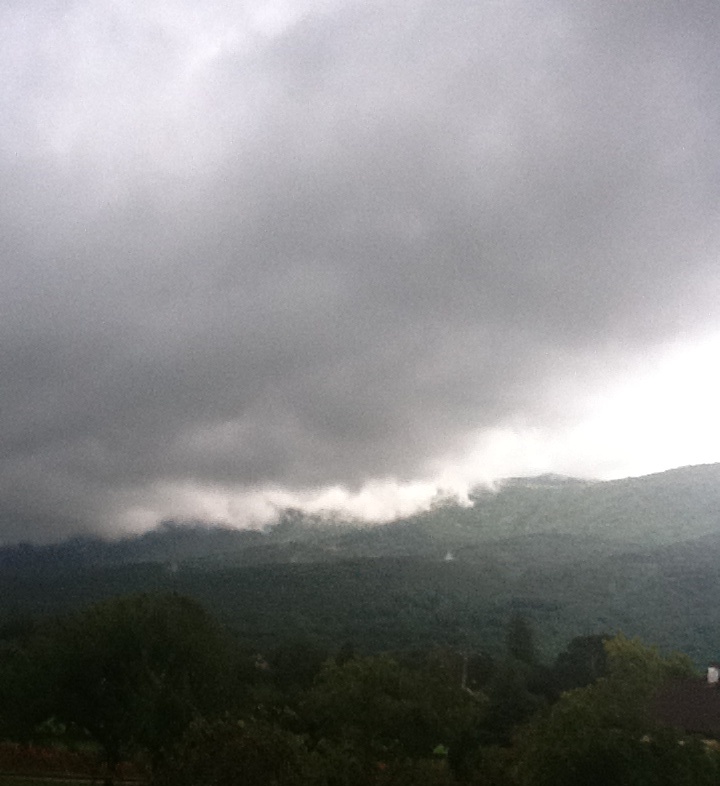
There has been very changeable, even cold, weather these past few weeks, and, as the photo shows, this morning stayed faithful to that, dawning grey and stormy on the Jura. As I have written before, looking at the weather is good practice, especially when it turns unpredictable, as it has been this Summer. Firstly, it helps us remember that there are many things which  happen in our lives – the weather, the behaviour of others, or  illness, for example—that we cannot  control. Thus we place our focus on the things which are within our control –  in the areas where we can train stability and constancy –  and do not waste energy on what we cannot influence. Setting aside some time in the day and in the week when we can rest and deepen our capacity to be focused is one way of doing that. The second lesson we can learn on a morning like this is somewhat the opposite – how to keep ourselves fluid in the areas that we do not want to make solid. Thus, whenever we notice that we are making certain emotions or judgments fixed and unchanging, we let go of them. Especially when we notice firm negative thoughts about ourselves – which normally flag themselves by beginning with words such as  “I always…” or “I am never able to”… – we can go back to the impermanence of the weather and remind ourselves that all things change. Then we can be kind to ourselves by realizing that this applies to us as well. We can let such thoughts pass through, just being aware of them, or hold fearful emotions more lightly, knowing they do not define us or how we are doing in our life.

The in-between state is good to know

Life is a good teacher and a good friend. Things are always in transition, if we could only realize it. Nothing ever sums itself up in the way that we like to dream about. The off-center, in-between state is an ideal situation, a situation in which we don’t get caught and we can open our hearts and minds beyond limit. It’s a very tender, nonaggressive, open-ended state of affairs.

Pema Chodron

How to develop calm in the heart

A beautiful quote from the Buddha on how to develop our heart and move it towards happiness. We let go of the past’s hurts and our worries about the future by staying in the present. Then we hold whatever is happening within us,  in awareness, without getting hooked by it or identifying with it. Mindfulness is really re-mindfulness, remembering to come back, non-judgmentally, to the here-and-now. It allows us work with the inner fabric of what is happening in our heart and mind at this very moment.

You shouldn’t chase after the past
or place expectations on the future.
What is past is left behind.
The future is as yet unreached.
Whatever quality is present
you clearly see, right there,
right there.
Not taken in; unshaken.
That’s how you develop the heart.

Bhaddekaratta Sutta

Travels outward and inward

It is no easy matter to stop short at just seeing.  Mahasi Sayadaw.

These days a lot of us are travelling, or on holidays, and come face to face with new environments or with sights of great beauty.  Breaks are good as they allow us discover a new gear between the full fast-forward at which life is normally conducted and full reverse – a kind of slowed-down,  steady pace of reflection and ease. However, sometimes the travel and the changes involved, or even seeing places of great beauty can trigger sadness or lead us into a sense of questioning or comparing the current state of our life and its history to date. This is maybe not surprising since all travel is perhaps related to our inner sense of “home”. So we notice that it is sometimes hard to just see things directly, without them setting off the continual chatter and commentary that accompanies our daily experience.  I once read Thomas Merton where he stated that he longed for some moments in which he was able to live a life without always examining it. It seems to me that we are all striving for that inner peace that allows us inhabit our lives without regret. To this end, the ascetic Bahiya came to the Buddha with the simple request – one which we all share  – to teach him the path that leads to happiness. The Buddha’s reply was incredibly simple and seems in some ways uninspiring : “When seeing, just see; when hearing, just hear; when knowing, just know; and when thinking, just think.”.  However, there is a great practical wisdom here that both points to the end result and is at the same time the method that leads to contentment. Real happiness can be learnt. It is related to the peace we get when we reduce the inner questioning and critical commentary, allowing us pay complete attention to whatever is before us, and thus live each moment fully, for what it is.

I should be content

to look at a mountain

for what it is

and not as a comment

on my life.

David Ignatow