Illness and the essential

When we are visiting someone who is seriously ill we can find that words fail us. Simple gestures, like hugs, often work better. It spreads to the rest of our life too. We see more clearly what is essential and authentic. We move away from the masks we normally hide behind, the silly ways we relate. We reach out.

Now is the time of dark invitation beyond a frontier that you did not expect.
Abruptly your old life seems distant.
You barely noticed how each day opened a path through fields never questioned
yet expected deep down to hold treasure. 

When the reverberations of shock subside in you,
may grace come to restore you to balance.
May it shape a new space in your heart
to embrace this illness as a teacher
who has come to open your life to new worlds.
May you find in yourself a courageous hospitality
towards what is difficult, painful and unknown.

May you use this illness as a lantern
to illuminate the new qualities that will emerge in you.
May your fragile harvesting of this slow light help you
release whatever has become false in you.
May you trust this light to clear a path
through all the fog of old unease and anxiety
until you feel a rising within you,
a tranquility profound enough to call the storm to stillness.

May you find the wisdom to listen to your illness,
ask it why it came,
why it chose your friendship,
where it wants to take you,
what it wants you to know,
what quality of space it wants to create in you,
what you need to learn to become more fully yourself,
that your presence may shine in the world.

May you keep faith with your body,
learning to see it as a holy sanctuary
which can bring this night wound
gradually towards the healing and freedom of dawn.

John O’Donohue, A Blessing for a Friend on the Arrival of Illness

Choose either love or fear

Happiness, anxiety, joy, resentment — we have many words for the many emotions we experience in our lifetimes. But deep down, there are only two emotions: love and fear. All positive emotions come from love, all negative emotions from fear. From love flows happiness, contentment, peace, and joy. From fear comes anger, hate, anxiety and guilt.

We have to make a decision to be in one place or the other. If you don’t actively choose love, you will find yourself in a place of either fear or one of its component feelings. Every moment offers the choice to choose one or the other. And we must continually make these choices, especially in difficult circumstances when our commitment to love, instead of fear, is challenged.

Elizabeth Kubler Ross

What I learnt from last year: Give up this year

The main trend in the maturational process can be condensed into the different meanings of the word “integration” Winnicott

Wholeness is not achieved by cutting off a portion of one’s being, but by integration of the contraries. Jung

What am I looking for this year? One answer coming from modern society and from some  branches of psychology seems to indicate that I should continue to work on my self along a path toward greater development or some notion of perfection.

This drive toward change and perfection is everywhere today. Society suffers from a type of inner anorexia – continually,  unhappily,  looking at its shape in the mirror and seeing problems with it.  It is never where it wants to be.  Last evening, during a lovely celebration with friends, I listened as talk turned to the unrelenting pressure and push to reach deadlines at work. In my own work this last year I have seen the faces of people, drained, feeling cut off and empty, confused and alone  – sometimes even after they have met with the success that they have sought. I feel it myself in the unrelenting message of the media,  promoting,  as easily attainable,  a perfect body, the perfect job, the perfect friend,  perfect children, the perfect lover, a perfect life. On TV or in the cinema, I see people leading perfect lives every day, not having to struggle with the unattractive realities or ordinariness of everyday living as imperfect human beings, and I look at myself in the mirror and wonder as I see aspects of my life, “What is up with me….. I must be doing something wrong.”

Everyone has their own version of the  perfect image to which they cannot match up, linked to a fear of never being accepted. Often the striving for perfection is a defense against anxieties,  or against engagements with others that may disappoint us. For me,  it  is a struggle which drains and exhausts me, because it is linked to a self-image or concept of who I think I should be. I was well grounded in this fear and internalized,  while young,  that anything less than an ideal was not good enough. And over the years I have applied that mainly in my relationship with others. I have linked my feeling right about myself to the amount of giving I can do –  without asking for much in return   – while hoping that this will remove a sense of emptiness which I experience as residing in myself.  As time passes  I see that it is not so much that I have new experiences, but the same pattern,  over and over again. I run to take refuge in the  safe haven of my mind from the anxieties for perfection felt deep in the cells of the body. However, this just reinforces the dynamics that I mistakenly think it will overcome .

So this year, rather than demanding perfection of myself or of others, this year I intend to allow myself be the “relative failure” which Winnicott has said  is normal – human beings “fail and fail….in the course of ordinary care”. I do not have to be perfect in giving. I can see that we are never fully integrated,  and demanding continual improvement, despite what others may say, is wrong for us. Our path is towards wholeness rather than perfection, and wholeness includes being able to live with contrasts within ourselves, such as having needs while responding to others.  It also means that I can live with a fundamental emptiness without immediately thinking that it needs to be fixed. And this is the key insight of meditation practice: Opening a  non-judgmental holding space around our inner experience, without taking the feelings of imperfection personally. We need to rest with our experience of ourselves, without trying to feel more than we actually do. We can  live with the absence of perfection.

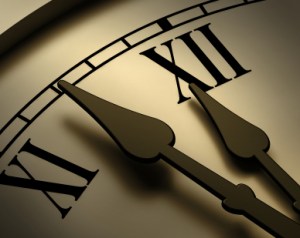
A New Year: Time moves on, or does it?

What, then, is time?  If no one ask of me, I know; if I wish to explain to him who asks, I know not. St Augustine

We cannot be separated from time…we ourselves are time.  Dozen

New Year’s Eve is one of the days when we can put ourselves under pressure by our understanding of time, which leads to judgmental thoughts.

Mindfulness practice emphasizes awareness of the present moment, without judgment, as being the only moment that we have to work with to produce happiness.  This is based on a frequent teaching in the Buddhist tradition, such as in The Sutra on Knowing the Better Way to Live Alone, where the Buddha advised his listeners not to dwell on the past and the future, but to live mindfully in the present. However, we can find a similar understanding in the Christian tradition from St Augustine, who argued that the past has no actual existence now,  and that the future has yet to come. We are subjectively alive and conscious only now, however much we like to run away from that.

A lot of stress this day comes from how we allow ourselves to see time as an external thing, which happens to us. Modern society likes to see time as something that has to be productive, provided we simply take better charge of it. Once we understand it this way we can easily fall into the fears associated with thoughts of it “being wasted”, “not being used well enough” or “going too fast”. These thoughts become judgmental on days like New Year’s Eve,  as we evaluate the past year and feel we have not used time well enough, or push ourselves with resolutions to “use” it better in the future. We even compare how we are using the minutes and hours just before midnight as some sort of measure as to how popular or successful we are.   This creates mental time zones in our heada future imagining of something better and a current dissatisfaction with aspects of our life now – which serves to make us feel misplaced in the present. We mentally want to relocate into the future and this creates a tension which can be felt in our body and in our emotions.

However, time is not something that exists independent to us. We create time and the sense of its passing in our minds. Therefore, it is linked to our inner contentment and gratitude more than to any outside, objective standard. The future exists mainly in our thoughts,  and is largely a projection of the fears and desires which exist in us now. Seeing this, we realize that the only place we can work on our happiness is not tomorrow or next week, but now. Most of the talk about future resolutions are rooted in some understanding of effort and pushing,  which only ultimately increase the tension they are designed to relieve.

On a similar level,  the past can also cause us suffering today.  One of the main ways is by replaying the events of the past year and repeating stories to ourselves about them . We seem to hang onto painful events just as much as happy memories; indeed we get some of our present identity from them and are almost afrauid to let them go.  Thus we lose the present moment by letting memories or events of the past year impact on us, turning into a fear, which we mask as judgment or contempt, thus creating discontent, striving, and comparing.  The best way to ease this suffering is to develop a compassionate understanding of oneself and others, softening the heart rather than hardening it.

Mindfulness practice is slowly accepting ourselves, without judgment, in the present, as it actually is. Suffering comes from demanding more choices than what the present reality is actually offering. The present moment then becomes problematic for us and we deal with this by wishing or dreaming, pushing or blaming. Accepting the present moment means allowing whatever emotions that arise on this day to arise, without seeing them as pointing elsewhere, or implicating anyone. In that way this day is like any other day: we have the choice to work with our reality with compassion or with fear. With compassion the fear of the future or the blaming of the past can dissolve; we are left with the ongoing unfolding of life itself, not our thoughts about it.
Tonight we’re going to party….

The expectations which a new year creates can sometimes heighten the sense of  disappointment or insecurity which we feel regarding where our life actually is.

There are a number of ways in which we can respond to this insecurity. One is to say “Tonight we are going to party like it’s ….” In other words, focus on what needs to be added to your life and throw yourself into something different. Convince yourself that what is required is to go out and find a party or new friends and surround yourself with life and music, get a new look and start all over again. In this way you can leave behind the past year/ person/ relationship/ bad patch (insert your own version here……….) and break free, finally, once and for all.  Now,  this not the worst of ideas, and I too will celebrate the evening in a party with friends.  However, if the underlying causes are not faced most likely it just offers relief for a few hours. Most things started in haste or under pressure tend to pick up at the same level of development we are at when we jump into them, and thus can just prolong the same issues.

A different response is to turn on yourself, focus on what is lacking, feel bad about who you are, dissect the reasons as to why you have reached the end of another year and yet are no further on than last year, and push harder. This pushing can take the shape of finding the root causes for your problems, such as having too many unhealed problems since childhood. Or it can simply focus on now, demanding more, pushing harder, renewing your positive thoughts or ambitions for the next twelve months. This is the way to be more focused/ more balanced/have a better body/ find a new relationship (insert your own version here………..) However, pushing ourselves towards perfection is unrelenting, and, as hard as we try, we are unlikely to turn off the critical messages in our heads that say “this is never good enough” or “what will those looking at me say?” And any desire for change which is based on unrelenting standards towards ourselves tends to maintain the same division between the “I” that observes and the “I” that is not good enough and thus just perpetuates the same perspective into the future.

There are some strange contradictions inherent in change and happiness. Change comes from accepting ourselves – resting with our imperfections and recognizing that we are already enough – and seeing that we are worthy of love and belonging.  All moving forward needs to be based on our capacity to sit still, accepting what we have. Happiness comes when we do not make it the focus of our efforts, but accepting that it comes even when we are not completely satisfied with where we are at any given moment.

Give up on yourself. Begin taking action now, while being neurotic or imperfect, or a procrastinator, or unhealthy, or lazy, or any other label by which you inaccurately describe yourself. Go ahead and be the best imperfect person you can be and get started on those things you want to accomplish before you die

Shoma Morita

Restlessness

I have been reflecting these days on how our sense of self is related to finding a space where we can feel safe, which we can be “at home”. It may be a place, but it is more likely found in the acceptance and love of others. We search for this all our lives. Without it we are restless, even lost.


One way to express the crisis of our time is to say that most of us have an address but cannot be found there.

Henri Nouwen

I long, as does every human being, to be at home wherever I find myself.

Maya Angelou