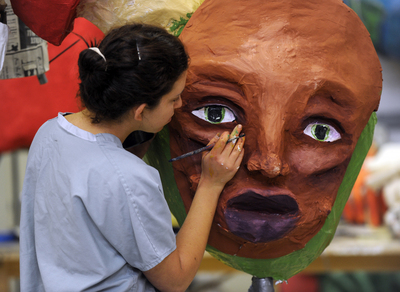
 We all tend to wear masks, the mask of superiority or of inferiority, the mask of worthiness or of victim. It is not easy to let our masks come off and to discover the little child inside us who yearns for love and for light, and who fears being hurt. Forgiveness, however, implies the removal of these masks, an acceptance of who we really are: that we have been hurt, and that we have hurt others. Forgiveness of ourselves, then, implies an acceptance of our true value. The loss of a false self-image, if it is an image of superiority, or the need to hide our brokenness can bring anguish and inner pain. We can only accept this pain if we discover our true self beneath all the masks and realize that if we are broken, we are also more beautiful than we ever dared to suspect. When we realize our brokenness, we do not have to fall into depression; when we see our true beauty, we do not have to become proud as peacocks.
Jean Vanier

 Once there was a young warrior. Her teacher told her that she had to do battle with fear. She didn’t want to do that. It seemed too aggressive; it was scary; it seemed unfriendly. But the teacher said she had to do it and gave her the instructions for the battle. The day arrived. The student warrior stood on one side, and fear stood on the other. The warrior was feeling very small, and fear was looking big and wrathful. They both had their weapons. The young warrior roused herself and went toward fear, prostrated three times, and asked, “May I have permission to go into battle with you?” Fear said, “Thank you for showing me so much respect that you ask permission.” Then the young warrior said, “How can I defeat you?” Fear replied, “My weapons are that I talk fast, and I get very close to your face. Then you get completely unnerved, and you do whatever I say. If you don’t do what I tell you, I have no power. You can listen to me, and you can have respect for me. You can even be convinced by me. But if you don’t do what I say, I have no power.” In that way, the student warrior learned how to defeat fear.