Not chasing after happiness

Some more reflections on not going anywhere, from a lovely recent book by Thomas Bien, entitled The Buddha’s Way of Happiness. Letting go of our instinctive need to “fix” ourselves – of the drive to do more and more –  is the key to change.  Staying put is a secret to getting places.

We get stuck in the drama of our lives. If we are to find happiness we instinctively feel that we have to go through something, endure some difficulty, go on a quest, slay dragons or monsters and ultimately find the gold or the princess in order to find the resolution and the peace which we seek. When we are told that happiness is available right now, we can hardly escape thinking what we have to do, endure and struggle to find it. We almost can’t help it.

Seeing life as “story” gets us caught in the notion that we don’t have happiness. We have to go after happiness somehow.…When we learn that we can be happy right now, just breathing in and out, and seeing a leaf for the miracle it actually is, instead of the idea of “leaf”, we’re almost disappointed. We want it to be a great achievement. If we can’t find a way to see it as an achievement, then we can’t feel special and feed the ego. Instead, in seeing things as they actually are, we step outside the ego.


The World comes to us

Jacques Lusseyran was a French writer and member of the Resistance, who continued to organize groups against the Nazi authorities even after he was sent to Buchenwald concentration camp. His work was all the more courageous because he had become totally blind at the age of 8, following an accident at school. He wrote about his early life in the book And There was Light: Autobiography of Jacques Lusseyran, Blind Hero of the French Resistance. This extract compliments the quote from Mark Twain this morning. Our discovery of the world begins with our active steps, which sometimes need courage and involve risk. However, we also need to know when to receive, and allow things to happen. The world is an  accomplice in this work of growth and continually presents moments when we can grow. Ironically, we frequently resist what happens to us each day, thinking that life is to be found elsewhere.

If I put my hand on the table without pressing it, I knew the table was there but knew nothing about it. To find out, my fingers had to bear down, and the amazing thing is that the pressure was answered by the table at once. Being blind I thought I should have to go out to meet things, but I found that they came to meet me instead. I have never had to go more than halfway, and the universe became the accomplice of all my wishes.

Sunday quote: Explore


Twenty years from now you will be more disappointed at the things that you didn’t do than by the ones you did do. 

So sail away from the safe harbor. Catch the trade winds in your sails. 

Explore, Dream. Discover.

Mark Twain


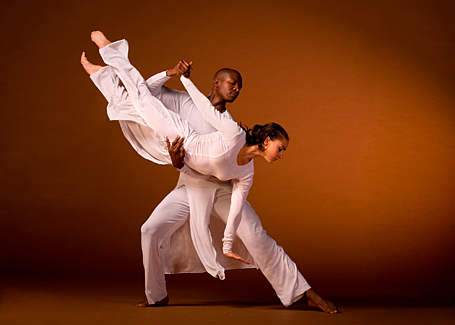
Dance


We are invited to forget
ourselves on purpose,
cast our awful solemnity to the winds and join in the general dance.

Thomas Merton

Elephants and fleas

Sometimes when our thoughts are like little fleas that jump off our noses, we just see the little flickers of thought, like ripples, which might have a very liberating quality. For the first time you might feel ” My goodness! There’s so much space, and it’s always been here.”   Another time it might feel like that elephant is sitting on you. It’s important to realize that meditation doesn’t prefer the flea to the elephant, or vice versa. It is simply a process of seeing what is, noticing that, accepting that, and then going on with life, which, in terms of the technique, is coming back to the simplicity of nowness, the simplicity of the out-breath. Whether you are completely caught up in discursive thought for the entire sitting period, or whether you feel that enormous sense of space, you can regard either one with gentleness and a sense of being awake and alive to who you are. Either way, you can respect that. So taming teaches that meditation is developing a nonaggressive attitude to whatever occurs in your mind. It teaches that meditation is not considering yourself an obstacle to yourself; in fact, it’s quite the opposite.

Pema Chodron

More thoughts on our underlying shifting ground

Similar thoughts to the ones posted on Monday, this time from a Christian perspective, written by probably the most influential Catholic Theologian of the 20th Century. He uses the word “pessimism” to describe the underlying sense of groundlessness which we frequently feel. His ideas are remarkably similar to ones found in other traditions, such as posts I have already written based on the work of  Pema Chodron.

This perplexity in human existence is not merely a transitory stage that, with patience and creative imagination, might eventually be removed from human existence. It is a permanent existential of humanity in history and, although it keeps assuming new forms, it can never be wholly overcome in history……. Of course, we cannot say that human finitude and historicity alone explain the fact that history cannot follow its course without friction and without blind alleys. Nor can this Christian pessimism be justified merely by the fact that it is impossible fully to harmonize all human knowledge with its many disparate sources, or to build a fully harmonious praxis on the basis of such disparate knowledge. We might also mention that we can never fully understand the meaning of suffering and death. Yet in spite of all this, the Christian interpretation of human existence says that within history, it is never possible wholly and definitively to overcome the riddles of human existence and history, which we experience so clearly and so painfully…..

People are afraid of this pessimism. They do not accept it. They repress it. That is why it is the first task of Christian preaching to speak up for it.

Karl Rahner, “Christian Pessimism”, in Theological Investigations XXII

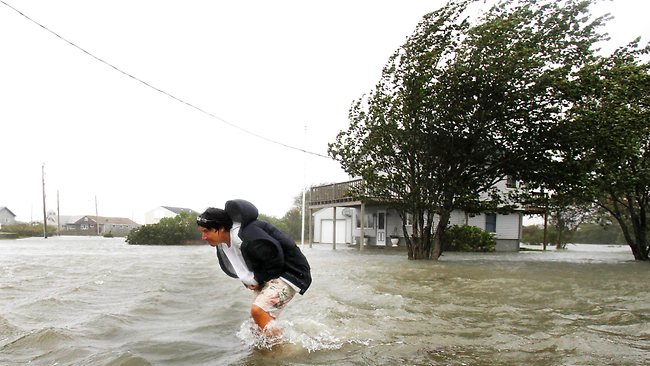
(Photo Credit: AP/Winslow Townson)