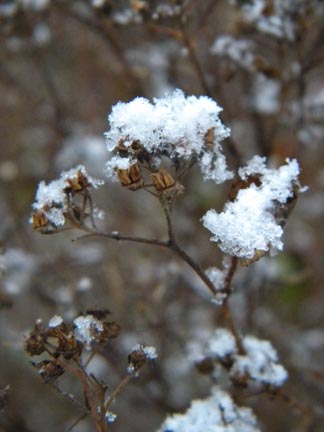
Winter has finally arrived here, with snow on the nearby mountains. So a little reflection on working with the things that we cannot change or with things that inconvenience us:
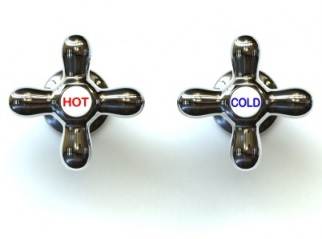
A disciple asked the Zen master Tung-shan: “When the heat of summer and the cold of winter arrive, how can we escape them?” Tung-shan answered, “Why don’t you go where there is no heat or cold?” “Where is this place,” asked the disciple, “where there is no heat or cold?” At this the master replied, “When it is hot, be completely hot; when it is cold, be completely cold.”
The disciple’s question had a symbolic meaning, and the answer was given on the same level. Heat and cold stand for circumstances that affect our daily existence but are out of our hands to regulate or rectify. Impersonal facts with far-reaching effects on us include: general economic conditions; situations of war, violence or peace; accidents; laws, policies and prejudices; possibilities and opportunities available in a particular community; mechanical and technological breakdowns and so on. The disciple wished to know how to escape such restraints. He wished to live in an ideal country where it is never too hot or too cold.
The Zen master’s reply was also symbolic. Instead of offering an escape route, he invited the disciple to plunge directly into the current situation and become completely hot in summer, completely cold in winter. According to an interpretation by Francis Dojun Cook, the Zen master was suggesting a radical affirmation of one’s very conditionedness in order to transcend it. By plunging directly into the current, one flows with it and on it. When resistance is futile, yielding to the flow of the current of events offers the promise of life. In order to understand the reply of Tung-shan, we have to realize that he was speaking of a change in attitude. Rather than attempting to change the facts of the situation, or escape them by flight, we may change our attitude, accept things as they are, and thereby move beyond them to a point where we find peace of mind. That point or region of peace is the country where “there is no heat or cold.” These conditions no longer exist as problems for us, although they continue to exist as facts. What has changed is our attitude toward them.
Charles Cummings, The Best Place to Live
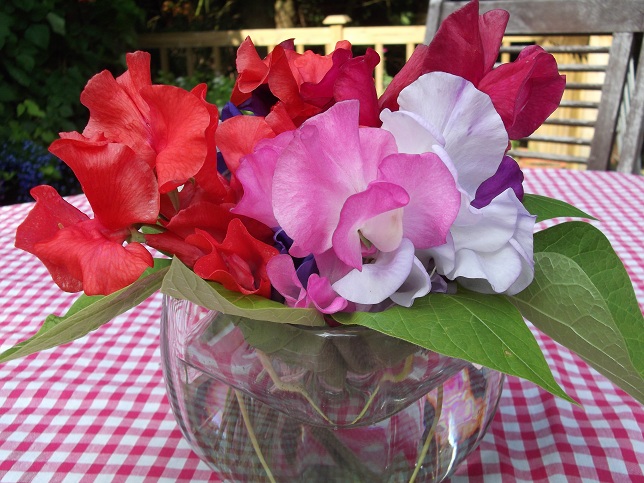 Joy has to do with seeing how big, how completely unobstructed, and how precious things are. Resenting what happens to you and complaining about your life are like refusing to smell the wild roses when you go for a morning walk, or like being so blind you don’t see a huge black raven when it lands in the tree you’re sitting under. We can get so caught up in our own personal pain or worries that we don’t notice that the wind has come up or that somebody has put flowers on the dining room table or that when we walked out in the morning, the flags weren’t up, and that when we came back, they were flying. Resentment, bitterness, and holding a grudge prevent us from seeing and hearing and tasting and delighting.