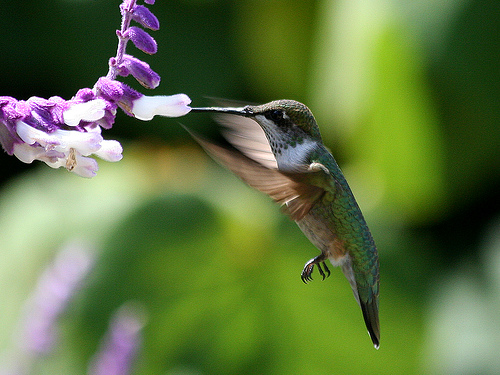
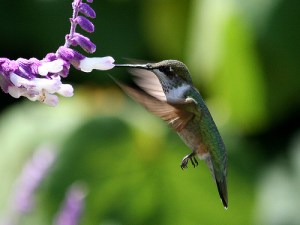
 After the warmth of the past weeks we have had one or two days of welcome rain showers. This morning one can see the meadows and hedgerows filled with an abundance of wild flowers, their movement and colour contrasting with the formality of the fields of wheat and barley. Butterflies are also moving everywhere, flitting from flower to flower, or keeping ahead on the path as you walk. Nature has a deep-down energy at this time – as Manley Hopkins says – and is not confined to straight lines. We too have this capacity within, we adapt and move on, continually seeking out the light and new places to grow. Mary Oliver sees this life in the small hummingbird, and she too realizes how rich we are when we take time to notice the little moments of each day and be moved by such sights.
When the hummingbird sinks its face
into the trumpet vine,
into the funnels
of the blossoms and the tongue leaps out
and throbs,
I am scorched to realize once again
how many small, available things
are in this world
that aren’t pieces of gold or power –
that nobody owns
or could but even for a hillside of money
that just float in the world, or drift over the fields,
or into the gardens,
and into the tents of the vines,
and now here I am
spending my time, as the saying goes,
watching until the watching turns into feeling,
so that I feel I am myself
a small bird with a terrible hunger,
with a thin beak probing and dipping
and a heart that races so fast
it is only a heart beat ahead of breaking –
and I am the hunger and the assuagement,
and also I am the leaves and the blossoms,
and, like them, I am full of delight, and shaking.
Summer Story
 The weather has changed these days. Not as settled or as consistently warm as it has been in the previous weeks. However, the wind brings a different texture. Why do we prefer one thing to another? Things are different, but equally beautiful.