Seeing what we stand on

Some words from poet David Whyte in these anxious times

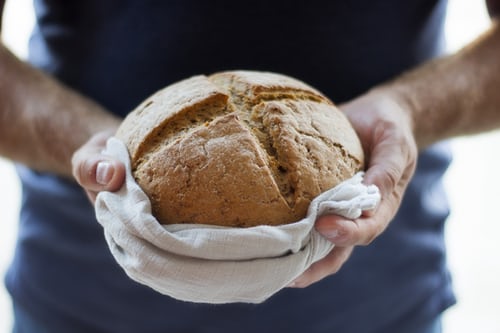
GROUND is what lies beneath our feet. It is the place where we already stand; a state of recognition, the place or the circumstances to which we belong whether we wish to or not. It is what holds and supports us, but also what we do not want to be true; it is what challenges us, physically or psychologically, irrespective of our hoped-for needs. It is the living, underlying foundation that tells us what we are, where we are, what season we are in and what, no matter what we wish in the abstract, is about to happen in our body; in the world or in the conversation between the two.

To come to ground is to find a home in circumstances and in the very physical body we inhabit in the midst of those circumstances and above all to face the truth, no matter how difficult that truth may be; to come to ground is to begin the courageous conversation, to step into difficulty and by taking that first step, begin the movement through all difficulties, to find the support and foundation that has been beneath our feet all along: a place to step onto, a place on which to stand and a place from which to step.  

from Consolations:  The Solace, Nourishment and Underlying Meaning of Everyday Words.

I don’t think any of us can quite understand the ground on to which we are now settling, due to to the effects of the Coronavirus on our world-wide societies and economies. … This will be a test and a re-ordering, not only of our health and our political and financial systems, but of of our mutual compassion, our willingness to work together and even more perhaps, our willingness to fundamentally change our societies to a more equatable sharing of both rewards and well-being.

from his Facebook page, March 11th 

Working with our anxieties

We can never solve our lives. Life is not a thing that can be broken and then fixed. Life is a process, and we can never solve a process. We can only participate in this process, either consciously or unconsciously. We aren’t going to find the perfect formula and then coast our way through life. We can’t make pain go away, although we can reduce unnecessary suffering significantly. The more deeply we investigate, the less we can grasp or even know this apparent self that Western psychology takes as its foundation. From the Buddhist perspective, the nature of life — and of our own mind — is basically open. There is no foundation; no ground to stand on. We can consciously participate in this open nature, but we can’t know it.

Bruce Tift, How to Work with Anxiety on the Path of Liberation

Give, not get

On the spiritual path, there’s nothing to get, and everything to get rid of.

Obviously, the first thing to let go of is trying to “get” love, and instead to give it. That’s the secret of the spiritual path. One has to give oneself wholeheartedly. If we want to be loved, we are looking for a support system. If we want to love, we are looking for spiritual growth. Love is the warmth of the heart, the connectedness, the protection, the caring, the concern, the embrace that comes from acceptance & understanding for oneself. Having practiced that, we are in a much better position to practice love toward others. We realize they are just as unlovable as we are, and they have just as many unwholesome thoughts. But that doesn’t matter. When we relate to other people, we can let them just be and love them

Ayya Khema

Advice in a crisis


The beginning of being fine is noticing how things really are.
1. Life is uncertain, surprises are likely.
2. If you are alive, that’s good; lower the bar.
3. In a dark place, you still have what really counts.
4. If you are in a predicament, there will be a gate.
5. What you need might be given to you.
6. The true life is in between winning and losing.
7. If you have nothing – give it away.

John Tarrant, It Would Be a Pity to Waste A Good Crisis

Meaning is created

When we don’t have sufficient information about what is happening around us, we create meaning. The problem is…this meaning is largely negative. We personalize events and other peoples reactions, interpreting them as responding to us when they aren’t. For example, we decide a person is judgmental because they are frowning while we talk, when we are actually missing the fact that this person always frowns when they are listening carefully. We make us a story that they dislike us, which makes us afraid of them. Why? Because negative facts make a stronger impression on us than positive or neutral ones. 

From a nice little book – Leah Weiss, The Little Book of Bhavana

The bigger picture

Faith does not need to push the river because faith is able to trust that there is a river.

The river is flowing.

We are in it.

Richard Rohr