How some of the world’s biggest companies are embracing mindfulness

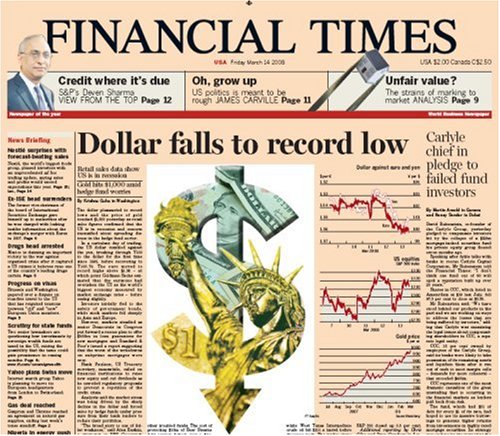
The Financial Times is probably not the first paper that comes to mind if you were considering reading  about mindfulness. However, recently they ran a very good report on how meditation and mindfulness are  part of a huge change in some parts of corporate culture. Some of it is in response to the challenging economic climate we work in, as 25% of all large U.S. companies have launched stress reduction initiatives in recent years. However, some is due to a change in understanding, a recognition of the health needs of employees, and a belief that inner and outer life has to be balanced in a happy and productive employee.  What is encouraging is seeing how some companies are structuring this holistic balance into their environments. For example, General Mills, the company behind Cheerios cereal and Häagen-Dazs ice cream, have a meditation room in every building in their Campus, where employees can drop in to recharge batteries, renew focus or simply take a break from meetings or conference calls. A lot of the U.S and world’s leading companies are involved in this new dialogue, such as Google. Twitter, LinkedIn and Target, and the article goes on to show that, besides health benefits, it also seems to have an impact on cost savings, productivity and leadership quality.

It’s about training our minds to be more focused, to see with clarity, to have spaciousness for creativity and to feel connected, says Janice Marturano, General Mills’ deputy general counsel, who founded the programme there. That compassion to ourselves, to everyone around us – our colleagues, customers – that’s what the training of mindfulness is really about.

There is a lot of interesting stuff in this article and the whole of it is worth a read. You can check it out here:

The mind business – FT.com (3)

A sense of space

The key thing here is, try not to watch the breath, but try feeling it go in and out, so you feel one with the breath. Just see if from the beginning you can minimize that sense of heavy-duty watching it, and just feel the breath going in and out. …. Then start to emphasize the outwardness and the space that the breath goes into, and emphasize that more and more. And then just see if you can let that sense of outwardness and space begin to pervade the whole practice more and more.

Chögyam Trungpa Rinpoche

The desert of the heart

The summer was like a resort — you knew your way around. But then you needed to return to the desert of your heart. The lengthy solitude begins, the days turn dull again; the wind removes, like wilted leaves, the world you once could name. Through branches bare the sky looks down, the only sky you have; be ground now, evening song and land, with which this sky can blend. Be subject like a tool for use, mature and fit for much— so he, of whom we often heard, will know you at his touch.

Rilke, The Book of Hours

Learning from the out-breath

When we sit in meditation, we feel our breath as it goes out, and we have some sense of willingness just to be open to the present moment. Then our mind wanders off into all kinds of stories and fabrications and manufactured realities, and we say to ourselves, ‘It’s thinking.’ We say that with a lot of gentleness and a lot of precision. Every time we are willing to let go at the end of the out-breath, that’s fundamentally renunciation: learning how to let go of holding on and holding back.

Pema Chodron, The Wisdom of No Escape

An intimate awareness of an overall process

Aware of my body, I breathe in. Relaxing my body, I breathe out.
Calming my body, I breathe in. Caring for my body, I breathe out

Thich Nhat Hahn

Breathing is the movement of life, the vital process that connects the body with its environment. The more we open and deepen awareness of the breath and the body, the m0re we understand the intrinsic dynamism of our entire experience. Nothing stands still for a moment. Breath, heartbeat, body, feelings, thoughts, environment are facts of an indivisible, interactive system, no part of which can really be claimed as “me” or “mine”

Stephen Batchelor, Buddhism without Beliefs.

Take a step back

The life view of getting things done and getting ahead moves in one direction; stepping back does not seem to be in accord with that view. It’s non-productive, so we don’t have time for it. But what we realize is that if we don’t step back , time has us. We are on the run, on the treadmill of work, career and getting ahead; on the vehicle of what we can get out of life, a vehicle that’s driven by a blind driver. But if we can’t afford ten minutes or even five minutes, that blind driver is going to stay in the driver’s seat. If we can step back, and not be anything or be nothing – not adopting some view that life’s a waste of time, but just curtail being wasted by time –  then there is room for a subtle inner light to dawn. For a moment we can stop putting the pressure on, and stop running to find something to be filled by.

Ajahn Sucitto, Turning the Wheel of Truth.