Little moments of gratitude

I pick an orange from a wicker basket

and place it on the table to represent the sun.

Then down at the other end

a blue and white marble becomes the earth

and nearby I lay the little moon of an aspirin.

 I get a glass from a cabinet, open a bottle of wine,

then I sit back in a ladder-backed chair,

a benevolent god presiding over a miniature creation myth,

and I began to sing a homemade canticle of thanks

for this perfect little arrangement,

for not making the earth to hot or cold

not making it spin too fast or slow

so that the grove of orange trees and the owl become possible,

not to mention the rolling wave, the play of clouds, geese in flight,

and the Z of lightening on a dark lake.

Then I fill my glass again and give thanks for the trout,

the oak, and the yellow feather, singing the room full of shadows,

as sun and earth and moon circle one another in their impeccable orbits

and I get more and more cockeyed with gratitude.

Billy Collins,  As if to Demonstrate an Eclipse

….. or following our dreams

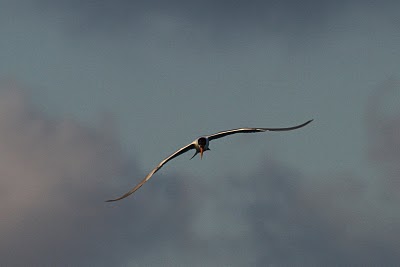
Birds make great sky-circles of their freedom. How do they learn it?

They fall, and falling, they’re given wings.

Rumi

When we stop clinging to the known and allow our dreams to become instruments of change, we learn to practice meditation in action at the deepest level. In these moments, we must risk taking a joyful leap with no guarantee of being caught as we fall.  In Zen practice, we call it stepping off of the hundred-foot pole — living fully without clinging to anything. Students often speak to me of the great fear that arises even contemplating taking a leap into not-knowing from the cliff top of their old life.  All we can rely on, after the joyful leap, is the reassuring discovery of what truly sustains us. I am still in freefall but sometimes I feel the comforting arms of “just this.”

Melissa Myozen Blacker, The Joyful Leap

There is always a “but”

Most people  mistake the habitually formed, neuronally constructed image of themselves for who and what they really are. And this image is almost always expressed in dualistic terms: self and other, pain and pleasure, having and not having, attraction and repulsion. As I’ve been given to understand, these are the most basic terms of survival. Unfortunately, when the mind is colored by this dualistic perspective, every experience — even moments of joy and happiness — is bounded by some sense of limitation. There is always a but lurking in the background. One kind of but is the but of difference. “Oh, my birthday party was wonderful, but I would have liked chocolate cake instead of carrot cake.” Then there is the but of “better.” “I love my new house, but my friend John’s place is bigger and has much better light.” And finally there is the but of fear. “I can’t stand my job, but in this market how will I ever find another one?” Personal experience has taught me that it’s possible to overcome any sense of personal limitation.

Yongey Mingpur Rinpoche, The Joy of Living

We always want something different

Suffering is the desire for more choices than reality offers, but reality is without options. Our mind creates mental alternatives when there are none in reality, and we do so by bargaining with reality through our desires and fears. The sense-of-self comes into play when we think that reality can be altered. As we consider the options we take ourselves out of the state of abiding within the moment into acting on the moment. When the moment becomes adversarial, we become self invested and determined to do something about it. This creates a sense of someone being on one side and reality being on the other, as if life was happening to us.

Rodney Smith, Stepping out of Self-Deception

What shapes our mind, our thoughts, our moods


My experience is what I agree to attend to,

Only those items I notice shape my mind.

William James, American psychologist and philosopher.

The address of life

“I have arrived” is our practice. When we breathe in, we take refuge in our in-breath,  and we say “I have arrived”. When we make a step, we take refuge in our step, and we say “I have arrived”.  This is not a statement to yourself or to another person.  “I have arrived” means I have stopped running, I have arrived in the present moment, because only the present moment contains life.

Stopping running is a very important practice . We have been running all our life: we believe that peace happiness and success are present in some other place and time. We don’t know that  everything – peace happiness and stability – should be looked for in the here and now. This is the address of life –  the intersection of here and now.

Thich Nhat Hahn, Happiness