
My experience is what I agree to attend to,
Only those items I notice shape my mind.
William James, American psychologist and philosopher.
My experience is what I agree to attend to,
Only those items I notice shape my mind.
William James, American psychologist and philosopher.
 “I have arrived” is our practice. When we breathe in, we take refuge in our in-breath, and we say “I have arrived”. When we make a step, we take refuge in our step, and we say “I have arrived”. This is not a statement to yourself or to another person. “I have arrived” means I have stopped running, I have arrived in the present moment, because only the present moment contains life.
Stopping running is a very important practice . We have been running all our life: we believe that peace happiness and success are present in some other place and time. We don’t know that everything – peace happiness and stability – should be looked for in the here and now. This is the address of life – the intersection of here and now.
Thich Nhat Hahn, Happiness
 We tend either to feel once removed from what is happening, or to become entirely lost in it. Both tendencies leave us with a sense of artificiality, however dramatic and sensational the situation may be. My understanding …is that it is possible to live in-between these two modes of limited being. We remain one with experience – not torn apart by a commitment to an image. Through abiding in the in-between we discover a subtle kind of personal confidence. It is not “my” confidence because it is a confidence that belongs to reality. The struggle of moving from finding security in false identities into realisation of limitless abiding beyond personality is difficult. It feels like it will cost us everything. But [instead]…we find there are more and more situations in which we remember ourselves more quickly. We are now more likely to be able to accord with whatever situation we are in as we move through the world – not because we have become more liberal or compromising, not at all, but because we don’t hold ourselves so tightly.
Ajahn Munindo, Unexpected Freedom
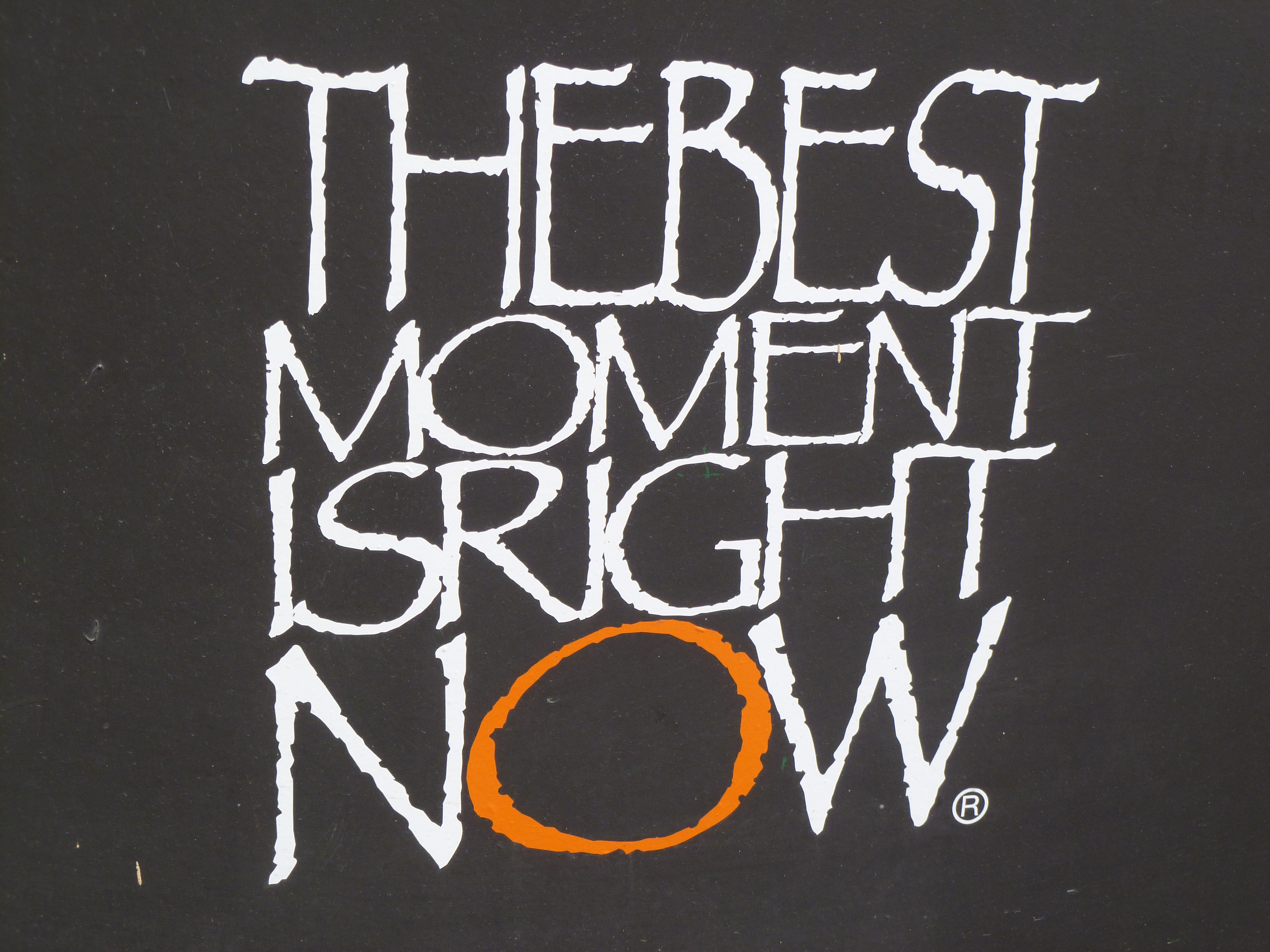
Mindfulness helps you go home to the present.
And every time you go there
and recognize a condition of happiness that you have, happiness comes.
Thich Nhat Hahn
 It seems that the key to the practice is maintaining vision and focus. Vision keeps an overview of what one is doing and the greater context in mind. Focus is concerned with the specific task at hand. The whole thing is too big to focus on at once but I can start with one simple thing, the floors. I like sweeping the floors. I know how to do it. I don’t feel anxious about it. I find it relaxing. And most days, people haven’t taken away the dust pan and broom so it is actually possible to do. When I’m sweeping the floor, I enjoy it. I relax into the movement, feel my body and breath and focus on the bit of floor I’m sweeping. But I keep the whole floor in mind. So the vision is the whole floor and the focus is the little bit I’m working on.
Ajahn Thanasanti, Maintaining vision, while Focusing
 Reflecting on life in this human form: it is just like this, it’s being able to sit peacefully and get up peacefully and be content with what you have; it’s that which makes our life as a daily experience something that is joyful and not suffering. And this is how most of our life can be lived – you can’t live in ecstatic states of rapture and bliss and do the dishes, can you? That’s why whenever we contemplate cessation, we’re not looking for the end of the universe but just the exhalation of the breath or the end of the day or the end of the thought or the end of the feeling. To notice that means that we have to pay attention to the flow of life – we have to really notice the way it is rather than wait for some kind of fantastic experience of marvelous light descending on us, zapping us or whatever. Can you trust that? Can you trust in just letting everything go and cease and not being anybody and not having any mission, not having to become anything?
Ajahn Sumedho, Being Nobody

