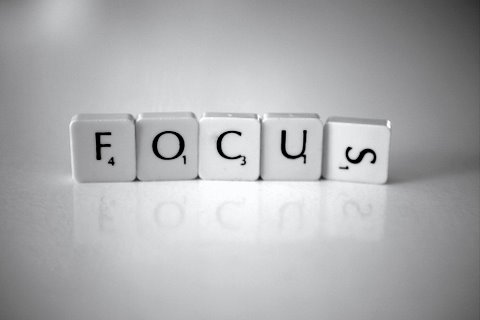
The range of what we think and do is limited by what we fail to notice. And because we fail to notice that we fail to notice there is little we can do to change, until we notice how failing to notice shapes our thoughts and deeds.
R.D. Laing
The range of what we think and do is limited by what we fail to notice. And because we fail to notice that we fail to notice there is little we can do to change, until we notice how failing to notice shapes our thoughts and deeds.
R.D. Laing
 When we handle things with ease we are changing the way we usually relate. The mind wants to know everything. Even if it doesn’t understand, it will have some belief. It will form an opinion or view and hang on to that just to fill up the space of not knowing. It wants to be on top of things. But this whole method of investigation and inquiry depends upon not knowing. It depends upon us being open and ready to not know. It depends upon us allowing mystery and letting the knowing arise out of that. It depends on our not being threatened…. from the point of view of the heart, the unconditioned mind, the unknown is mysterious . . . but it is beautiful. You don’t have to fill up the unknown with a belief or a concept or idea. You can leave it as mysterious because 99% of it will be mysterious anyway. There is no way that we can understand it all. So the heart’s response to that mystery is faith – a trust in the fundamental orderliness of the universe.
Ajahn Amaro, Open to Any Possibility
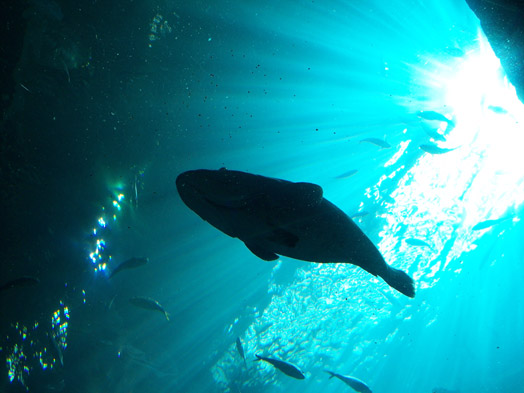 A fish cannot drown in water. A bird does not fall in air. Each creature God made must live in its own true nature. Mechthild of Magdeburg
Mark Nepo, The Book of Awakening
 Mindfulness holds a boundary so that we don’t get overwhelmed, shut down or react to the feelings that we have; then with full awareness, we get the whole of it, how that impression arises and what it does. We may then understand: ‘this feeling or impression is based upon this perception and thought, and it subsides when that thought or perception is removed.’ ‘This negative impression arises with that perception or that memory and it subsides when I practise loving-kindness, or even when I can just sit with it and let it subside.’ Together mindfulness and full awareness acknowledge what is going on, and where it stops. They don’t bring ‘I am,’ ‘I should be’ into it.
If we establish these skills of attention, they free the mind from acting on or reacting to the results of the past. If we attend to the present impressions, the present moods and sensations, and cut off the proliferations and projections, we’re not living in the fog of resentment, fantasy, romance, or other biases. This means that our attention, and consequently, our moods, actions and speech, are going to be clearer and brighter
Ajahn Sucitto, Bright Kamma: Support for Attention
 Life is a constant creation.
It is a moment by moment, instant by instant creation. I don’t mean by this that it is a set of discrete creations, it is not like that. But nevertheless, this spontaneity is constantly arising.
And it is within this that is our freedom.
Albert Low, Zen Teacher, Montreal Zen Centre.
 Every time I reacted negatively, pushing things away, that action implied that there was something to fear. That this feeling or this thought was dangerous; that it was going to really hurt me, or invade me; that it was something that was really me and mine. As I began to welcome it all I realised that when you accept everything, only then can you sense that, after all, there is nothing to fear. None of it really belongs to a self or comes from a self. It cannot touch the mind which knows, cannot affect its nature. Whatever shape of vessel you pour the water into, with this same total accommodation, the water changes to the shape of the bottle. It doesn’t say: ‘I will not be poured into a square bottle, square bottles are not my scene. Round bottles only, please!’ When there is complete acceptance, there is just the sense of being the knowing, being that which is aware of all that comes through the mind.
Ajahn Amaro

