Wherever we are, from one day to the next, the Earth is moving at the same speed. Yet in the modern world, we’ve convinced ourselves that the world is moving faster, and that speed is the way to make our life work. Under the pressure of schedules and commitments, we think we can accomplish more if we speed through our day. Speed gives life a frantic quality. It is an anxious state of mind that keeps us from settling into whatever we are doing. There is always something more important than what we’re doing now. We’re double-parked outside a store, trying to find what we need, while talking to our mother on the cell-phone. Rather than accomplishing our activity well, we are nullifying it, because we aren’t really there for it. Speed comes from being overly ambitious. We aren’t content with our own mind, so we become aggressive in how we conduct our life. In an effort to match a concept of what success might be, we fill our calendars and spend the whole day holding on to our “to do” list. We chase after appointments, phone calls and meetings with jealousy, competition, fixation and irritation — whatever it takes to get us where we think we need to go. When life still won’t match our concept, we get mad — mad that others are late, or mad that we are early.
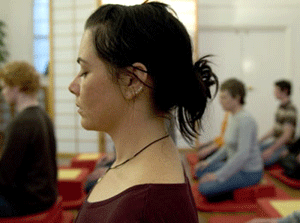
The practice of meditation offers us the opportunity to slow down for a short time every day. This is how we can begin to step out of the cycle of speed. In sitting still and focusing our mind, we are declaring daily that this human life is precious. Taking time to appreciate it comes from our own determination and wisdom. Through this discipline, we simplify our life. We regain the space to appreciate it, having lost nothing but speediness. We learn how to float aloft, carried by the winds, appreciating what we see in every direction. We learn to relax.
Sakyong Mipham Rinpoche, Slow Down, You Move Too Fast