Being aware of our patterns

File:Mosaic - Mosquée de Paris.jpg

One reason we strengthen our awareness in meditation is to see more clearly the patterns laid down in our childhood, how we believe these to be our personality and the limiting stories which they often tell us about our abilities.

According to neuroscience, even before events happen the brain has already made a prediction about what is most likely to happen, and sets in motion the perception, behaviors, emotions, physiologic responses and interpersonal ways of relating that best fit with what is predicted. In a sense, we learn from the past what to predict for the future and then live the future we expect.

Regina Pally, The Predicting Brain

photo MarcCooperUK

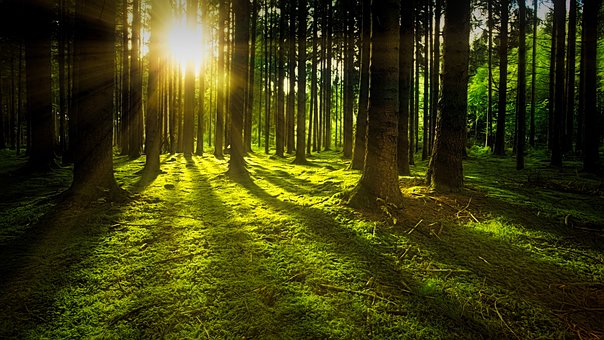
Saturday: learning by doing nothing

trees quote 1

The dream of my life

is to lie down by a slow river

and stare at the light in the trees –

To learn something by being nothing

a little while but the rich

lens of attention

Mary Oliver, Entering the Kingdom

“If only” this would change …

drop

People [have always] faced the same kinds of  issues we face now, but with different window dressing. In the time of the Buddha,  men and women were arguing, gossiping, judging others, losing their perspective, overreacting, sexualizing their experiences, chasing after greener pastures, obsessing about non-essentials, feeling lonely and creating too many pipe dreams….. Nothing has fundamentally altered.

How many of us  are still convinced, mature as we may be, that if our partner would only change, or if we could meet the perfect person, everything would be fine?  These are the dysfunctional myths and illusions that drive our lives in very dissatisfying directions.  How many people remember the song from the musical Fiddler on the Roof – “If I were a Rich Man…” 

What is your “big if”?  The big “if” that leads you away from wisdom and reality?

Lama Surya Das,  Awakening the Buddha within

This is the way it is

File:Gold Necklace with Medallion Depicting a Goddess LACMA 50.22.20 (2 of 2).jpg

Advice from two great teachers from the Thai tradition, where I find myself mainly at home.

Ajahn Sumedho has had a huge influence on the development of meditation practice in the West. Here he refers to an observation made by one of the great figures in Thai Theravada Buddhist practice, summarizing neatly the whole of mindfulness practice. Its an observation which is one of my favourites and points us towards the right attitude.

That being said, it’s not so easy to work with when circumstances are challenging, or, you know, those evenings when the heart just feels a bit lost.

Buddhadasa Bhikkhu said, “If there was to be a useful inscription to put on a medallion around your neck it would be ‘This is the way it is’.”

This reflection helps us to contemplate: wherever we happen to be, whatever time and place, good or bad, ‘This is the way it is.’

It is a way of bringing an acceptance into our minds,

a noting rather than a reaction.

Ajahn Sumedho, The Way it is

Fresh starts

File:Love-romantic-date-candlelight (23958771669).jpg

A friend reminded me yesterday that it is all about starting each day anew, with fresh eyes –  like lighting a candle in the darkness and seeing things in the glow of a kind light:

I’m heading into 2017 aspiring to look at life through the eyes of a child. Buddhists call it “beginner’s mind” — a corrective to the cynicism that comes when we let hard realities darken our vision and diminish our imagination. It’s a way of looking at the world that doesn’t deny the darkness, but makes fresh starts possible in everything – from our personal to our political lives.

What’s “the growing edge” in your life?

Whatever it is, may 2017 be a year in which our adult powers dance with our child-like imaginations to help make all things new.

Parker Palmer

With thanks to makebelieveboutique.com

Setting out in trust

path

We sometimes think we know the way we are going….

A person often meets his destiny on the road which he takes to avoid it

Lhomme rencontre souvent son destin sur la route qu’il emprunte pour l’éviter

Jean de la Fontaine, 1621 – 1695, French poet and writer of Fables